
Arrest Warrants in Grimes County
An arrest warrant authorizes an officer to make an arrest. Under Texas Code of Criminal Procedure Chapter 15, a magistrate may act on a sworn complaint that states an offense and facts supporting probable cause. That path differs from how a court responds to a missed setting. The paperwork itself should name the issuing authority and the charge. Grimes County lists all three JP judges as magistrates. Navasota Municipal Court keeps its own fine-only authority. County and district judges act within their courts. Reading the document first tells you which clerk holds the file and what court issued it.
Grimes County Warrant Complaints Need Review
A sworn complaint or affidavit is what a magistrate actually reviews. Chapter 15 governs the general complaint and warrant process statewide. Chapter 45A applies a similar sworn-complaint, probable-cause framework to justice and municipal courts. The magistrate decides whether to issue a warrant. In Grimes County, supporting affidavits are not always public, so the record may not show every filing. The legal test is probable cause, not a final ruling. If a paper names a court or magistrate, take it to that clerk and ask which documents you can see. Texas Chapter 15 covers the general arrest-warrant procedure from complaint to issuance.
What a Grimes County Arrest Warrant Contains
Texas law spells out what a warrant must contain. It names the accused person or gives a description, states the offense, directs the proper officer, and commands that the person be brought before the issuing authority. Grimes County posts no sample warrant. No local number format is published either, so the document itself is your guide.
| Warrant number | Local format not published No public sample was found. |
|---|---|
| Person or description | Information used to identify the person named in the instrument. |
| Offense | The charge or alleged offense listed in the court record. |
| Issuing authority | The court or magistrate that signed the process. |
| Bond | Confirm the current amount and type with the court or jail. |
| Service and disposition | Ask the appropriate court or agency; public indexes may not show live updates. |
Grimes County Arrest Warrant Service
Issuing and serving are separate jobs. A magistrate or court signs it. A peace officer then executes the order. In Grimes County, the Sheriff, constables, and Navasota Police Department each have roles that depend on the process and the location, with elected constable agencies handling much of the civil process directed to them. For a county warrant status question, the Sheriff FAQ sends the person concerned to appear in person with valid state ID or a driver's license. No warrant information goes out by phone. A clerk's index is not proof of service. The county Constable page explains service authority and lists precinct contacts.
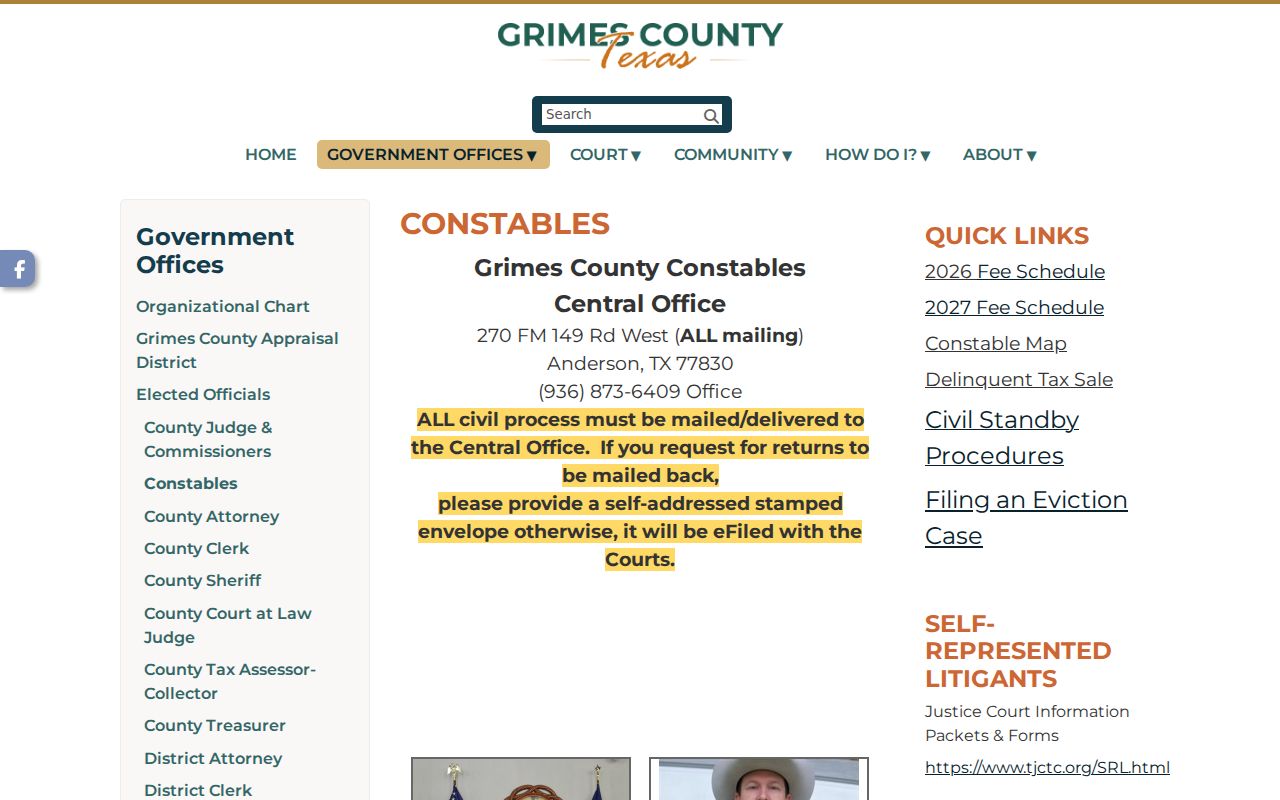
Contact the court for case action and the proper agency for an operational question.
How Arrest Warrants Are Served
The officer serving a warrant verifies it and acts within the authority it grants. After an arrest comes booking. Then the person moves through magistrate and bond procedures. The Grimes County Sheriff FAQ warns that release can take time. State and national records get checked first. No local office promises a fixed time for booking, magistration, or release. Once released, the charge stays with the court. Bond sets custody and appearance conditions; it does not close the case. Track the next court date and keep every paper the jail and clerk hand you.
Grimes County Sheriff’s Office
382 FM 149 West, Anderson, TX 77830
Main / dispatch: (936) 873-2151
Jail: (936) 873-6439
A Search Warrant Is Not an Arrest Warrant
Search and arrest warrants do different things. A search warrant lets officers search a named place, person, vehicle, or item. An arrest warrant authorizes taking someone into custody. Grimes County JP magistrates may issue search warrants, and Navasota's monthly court report tracks a separate search-warrant count. Search affidavits and returns face different access limits than a public arrest docket. Give the clerk the document type and case number. One search-warrant filing alone does not establish an arrest warrant against anyone. Chapter 45A, Article 45A.104 sets the warrant requirements for justice and municipal courts.
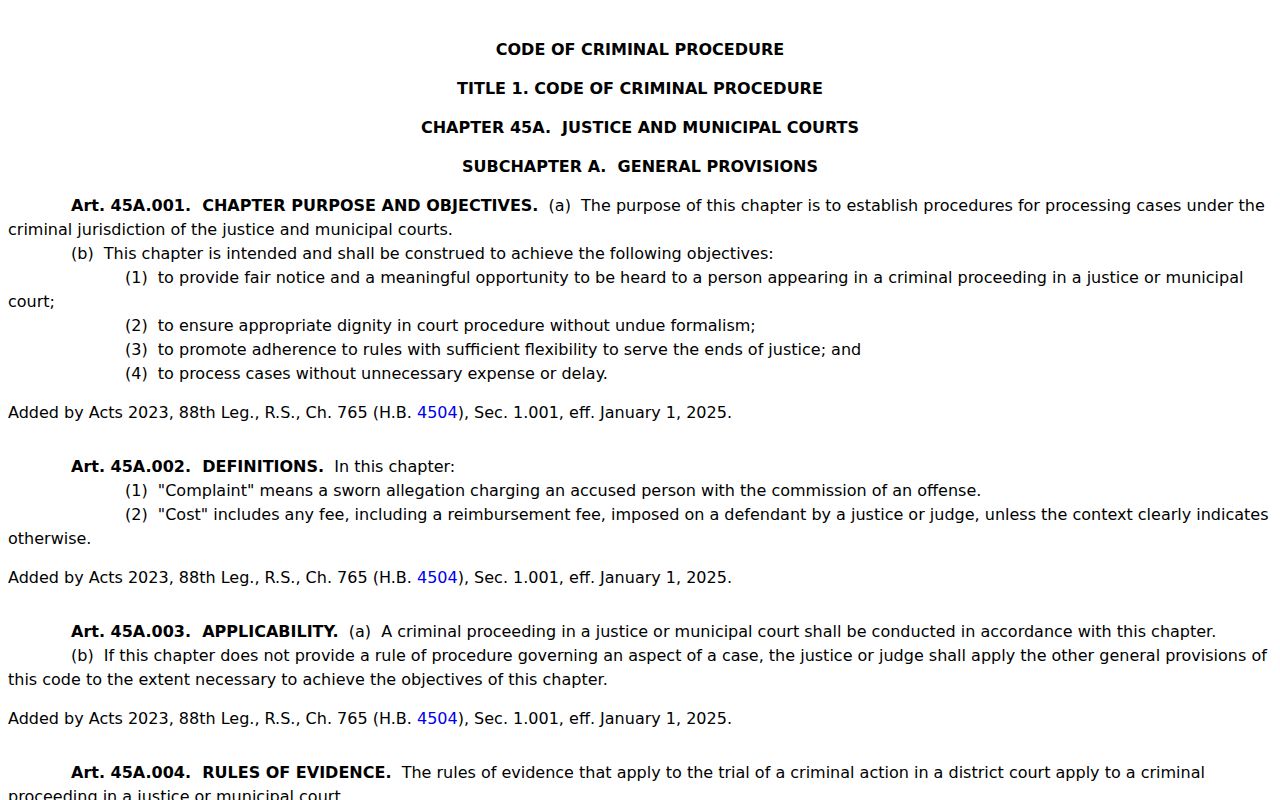
The statute page covers court process for justice and municipal warrants and names no Grimes County person, case, or charge.
Arrest Warrant vs Summons vs Bench Warrant
A summons asks you to appear. An arrest warrant authorizes custody on its terms. A bench warrant usually follows a missed setting or a violated court order. In Grimes County, the court assigned to the case decides which process applies and how to respond. Use the document's name and cause number. Treat each docket entry as its own paper, not one blanket warrant.
| Process | Why It Is Issued | First Local Route |
|---|---|---|
| Arrest warrant | Sworn complaint and probable cause | Issuing magistrate or court |
| Summons | Notice to appear under court process | Court listed on the notice |
| Bench warrant | Missed setting or court obligation | Court that set the case |
Grimes County Arrest Records Have Limits
Texas Government Code §552.108 can shield information whose release would interfere with an investigation or prosecution. A warrant, a complaint, a booking report, a court docket, and a bond form are different records. Each record has its own keeper. Each office applies its own release rules, so ask for a specific existing document and let the holder decide what can go out. One more limit matters in Grimes County. Family Code §58.010 makes juvenile arrest warrants and their supporting complaints confidential, subject to listed exceptions. A public county name search does not reach those files.
Access note: Public court records do not automatically include every operational or protected law-enforcement record.
Family Code §58.010 sets juvenile confidentiality rules.
Government Code Chapter 552 explains public records and exceptions.
What to Do If There Is a Warrant for You
Found a warrant in your name? Start with the cause number and the issuing Grimes County court, and ask what process is on file and what the court requires. The Sheriff's in-person self-check covers only you. A lawyer can weigh a planned appearance, a reset, posting bond, or a motion to recall or quash the warrant. The clerk explains the filing steps but cannot give legal advice.
Important: Confirm the court’s instructions before arranging a surrender or bond, and ask a lawyer to review the case and available steps.
Grimes County jail cash bond rules are firm. Bring a cashier's check or money order, the full amount, and photo ID. Verify current details before paying. Then keep the receipt or signed order and ask when related records will be updated.
Grimes County Arrest Warrants and Felony Files
Felony papers in Grimes County run through the District Clerk and the 12th or 506th District Court. County Court at Law takes its own misdemeanors. JP and Navasota Municipal Court handle lower-level matters. The Sheriff's Communications Division keeps operational warrant information separate from the clerk indexes, and the District Clerk's page names its records contact. Federal cases follow a different route. Grimes County sits in the Southern District of Texas, Houston Division, and the Southern District of Texas lists the correct division. A federal docket search may not surface a sealed warrant, so for a specific case rely on the federal clerk, the official agency, or counsel.